
The Forgotten Psychedelics

Welcome to The Psychedelic Blog. Bestselling essayist & Psychedelic cultural analyst examining how altered states shape relationships, grief, death & meaning.
This week: A Tour Through the Psychedelic Graveyard.
No, Ayahuasca isn’t calling you.
It’s one of hundreds of psychoactive plants humans have used throughout history. The reason you’ve heard of Ayahuasca & not most of the others has less to do with destiny & more to do with culture, geography, marketing, accessibility, timing & a few celebrities who helped turn it into a global phenomenon.
History remembers winners.

1. Why Some Psychedelics Won
The modern Psychedelic conversation revolves around a remarkably small number of substances. Psilocybin, LSD, MDMA, Ayahuasca & 5-MeO dominate books, podcasts, documentaries, retreats & conference stages. This creates the illusion that these substances were destined to become important…they weren’t.
Humans have experimented with hundreds of psychoactive plants, brews, snuffs, cacti, seeds & compounds throughout history. Most never achieved global recognition. Some never left the valley, jungle, mountain range or tribe where they originated. Others disappeared entirely. The question isn’t why you’ve heard of Ayahuasca…the question is why you’ve heard of Ayahuasca & not the hundreds of alternatives that lost the cultural lottery.
The winners benefited from a combination of geography, colonial history, ease of cultivation, safety, religion, scientific research, counterculture movements, tourism & celebrity influence. A Psychedelic that was easy to grow, transport, study & integrate into existing cultural narratives had a massive advantage over one that wasn’t.
Ayahuasca may be the best modern example. The brew emerged from Indigenous traditions in the Amazon, but it arrived in the West at precisely the moment people became fascinated with healing, spirituality, personal transformation & Indigenous wisdom. The experience generated compelling stories:
Tourism spread those stories.
Retreat centers emerged.
Podcasts amplified them.
Celebrities repeated them.
Social media turned Ayahuasca into a global brand.
None of this means Ayahuasca isn’t valuable. It simply means its position cannot be explained by pharmacology alone. If history had unfolded differently, another plant medicine might occupy the exact same cultural role. What people describe as destiny or a calling is frequently a story told after the fact. Geography, economics, tourism, media & timing usually deserve far more credit.
2. The Psychedelics That Lost
Not every Psychedelic was destined to become LSD, Psilocybin or Ayahuasca.
History is filled with psychoactive plants, brews & compounds that never escaped obscurity:
Some disappeared because they were dangerous.
Some because they were impractical.
Some simply arrived in the wrong place at the wrong time.
The Local Ones
Many Psychedelics never spread beyond a specific tribe, valley, mountain range or region.
They were important locally but lacked the trade routes, researchers, tourists or cultural movements necessary to carry them elsewhere.
A substance can be powerful & still lose if nobody beyond a few thousand people ever hears about it.
The Difficult Ones
Some Psychedelics are brutally inconvenient.
They taste awful & require complicated preparation. Produce nausea, vomiting or other side effects that make the experience difficult to sell to outsiders.
A mushroom chocolate has a much easier path to popularity than a medicine that feels like swallowing poison.
The Dangerous Ones
Not every psychoactive substance comes with a generous margin for error.
Some have a narrow therapeutic window where the difference between an active dose & a dangerous dose is uncomfortably small. Others can produce serious physical complications if prepared incorrectly.
Modern culture rewards substances that feel relatively predictable.
The Weird Ones
Some Psychedelics never fit the stories modern culture likes to tell.
They don’t neatly produce healing, self-discovery, productivity or spiritual awakening. Their effects can be bizarre, confusing, seductive, dreamlike or impossible to explain.
The Psychedelic renaissance didn’t just select for powerful substances…it selected for substances that generated narratives people wanted to repeat.
3. Inside The Psychedelic Graveyard
Ololiuqui
Long before Westerners discovered Psilocybin mushrooms, Indigenous peoples in Mexico were consuming the seeds of Turbina corymbosa in divinatory ceremonies. The Spanish documented its use as early as the 16th century, then spent centuries trying to suppress it. Despite a rich history, Ololiuqui never escaped regional use the way Peyote or Ayahuasca did.
Yopo
Made from the seeds of Anadenanthera peregrina, Yopo is a powerful snuff traditionally used throughout parts of South America & the Caribbean. The experience can be intense, physically uncomfortable & difficult to describe. It survived in pockets of Indigenous culture but never found a comfortable place in the modern Psychedelic revival.
Vilca
A close cousin of Yopo, Vilca was used in the Andes long before European contact. Archaeological evidence suggests ceremonial use stretching back centuries. Despite its historical significance, it remains largely unknown outside specialist circles & Indigenous communities.
Cebil
Another member of the Anadenanthera family, Cebil played an important role in parts of Argentina & surrounding regions. The preparation process is more involved than simply eating a mushroom or swallowing a capsule. In the competition for global attention, convenience matters.
Fly Agaric
The iconic red mushroom with white spots may be the most recognizable mushroom on earth, yet it never became the flagship Psychedelic. Unlike Psilocybin mushrooms, Fly Agaric contains a completely different set of compounds & produces effects that can feel dreamlike, sedating, bizarre & unpredictable. It was simply too strange for the modern therapeutic narrative.
Datura
Datura may be the ultimate example of a Psychedelic that lost for good reason. Used historically in multiple cultures, the plant can produce powerful hallucinations but also carries serious risks. Experiences are frequently described as terrifying, confusing & impossible to distinguish from reality. Modern Psychedelic culture largely left it behind.
Salvia
For a brief moment, Salvia looked like it might become a major player. Instead, millions of people watched videos of teenagers falling over furniture on YouTube. The experience is short, intensely strange & difficult to integrate into narratives about healing, growth or self-improvement. Salvia became a punchline instead of a movement.
The Ones We’ve Already Forgotten
The most interesting category may be the substances nobody talks about at all. Ethnobotanical records are filled with psychoactive plants that never crossed into global awareness. Some disappeared because the cultures that used them disappeared. Others were suppressed, abandoned or replaced. The Psychedelic graveyard is much larger than most realize.

4. The Myth Of The Sacred Medicine
One of the assumptions embedded in modern Psychedelic culture is that the substances sitting at the top of the hierarchy somehow earned their position through merit.
Ayahuasca must be special because everyone talks about it. Mushrooms must be uniquely important because they’re everywhere. Certain medicines become surrounded by an aura of inevitability, as though history carefully evaluated every psychoactive substance on earth & selected the winners.
That’s not how cultural evolution works.
The substances that survived weren’t necessarily the most profound, the safest, the most effective or the most spiritually significant. They were the ones that fit the moment. They aligned with existing cultural narratives. They were easier to transport, easier to market, easier to study or easier to build communities around.
This doesn’t diminish their value. It simply challenges the assumption that popularity is evidence of superiority.
The same selection pressures operate everywhere else in culture. The most popular religion isn’t automatically the truest. The most viewed podcast isn’t automatically the wisest. The bestselling book isn’t automatically the best written.
Psychedelics are no different. History remembers winners…but winning & being superior are not the same thing.
McDonald’s won too.
5. What Will Be Forgotten Next?
Imagine reading a book about Psychedelic history a hundred years from now.
Will Psilocybin still dominate the conversation?
Will MDMA become as normal as antidepressants?
Will 5-MeO be remembered as a breakthrough or a brief cultural fascination?
Will entirely new compounds emerge & push today’s favorites into the background?
We have no idea. That’s precisely the point.
The modern Psychedelic movement treats today’s hierarchy as though it were permanent. As though the substances currently receiving the most attention are destined to remain at the center of the conversation forever.
History suggests otherwise.
The Psychedelics we obsess over today may eventually become footnotes. Some will survive, some won’t. New substances, new technologies & new cultural narratives will reshape the landscape just as they always have.
History remembers winners. Until it doesn’t.
Up next for Sunday’s Insider: I traveled to Oaxaca to give a talk on Psychedelics. Along the way I found cannabis clubs hidden behind anonymous doors, debates about culture, indigenous traditions, mushroom murals & a city unlike any I've experienced before. A dispatch from Oaxaca.
If this piece resonated, tap the ❤️, leave a comment or restack it for someone else who might enjoy it.
And if you want the deeper essays, join The Insider by becoming a Paid Subscriber.
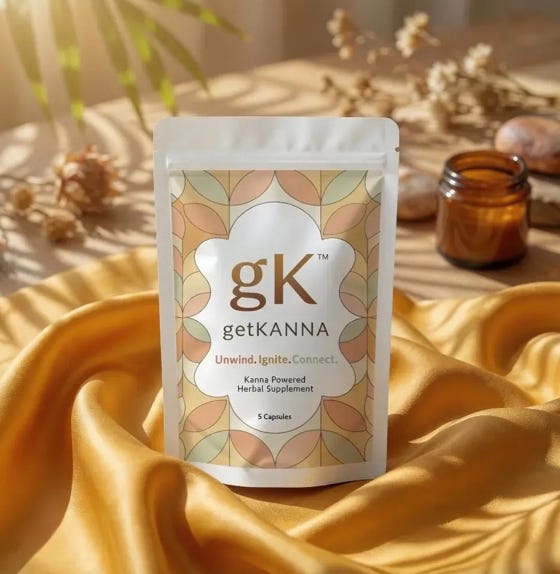
🌿 Order getKANNA — Free Shipping for Subscribers
Kanna has become one of my most reliable allies. For unwinding after long days. For presence, connection & intimacy. For feeling more alive without numbing out.
getKANNA is a premium Kanna supplement designed to help you unwind, ignite & connect — without alcohol, without excess.
Ideal if you’re looking for:
A healthier alternative to alcohol
A softer, plant-based substitute for MDMA
A way to feel more human in a hyper-digital world
New here? What is Kanna?
Perfect Date Night Here
Follow us on Instagram Here
Subscriber perk: Use code FRIENDS0fGK2 for Free Shipping
Unwind intentionally.
Really interesting! Hadn't heard of most of these, although I did try salvia once upon a time (in college) and my experience was similar to what you described: falling over furniture. But it's interesting to think about which ones get popular and why.
When I was in high school we used to watch a news broadcast on something called Channel 1 news that was hosted by teenagers. I've always remembered one episode they did that showed Indians in the Amazon having Yopo blown into their sinus cavities via someone else using a hollowed out stick, been 30 years and I still have the image in my mind, maybe it's a sign I should try Yopo! May be wrong but from what I remember it's effects are something like Ayahuasca and the Yopo absolutely burns the shit out of your sinuses.